
That official letter.
Explained in 20 seconds.
Photograph it. Letter tells you what it says, how serious it is, when the deadline is and exactly what to do, in your language.
No account. The photo is read once and not stored. First letter free.
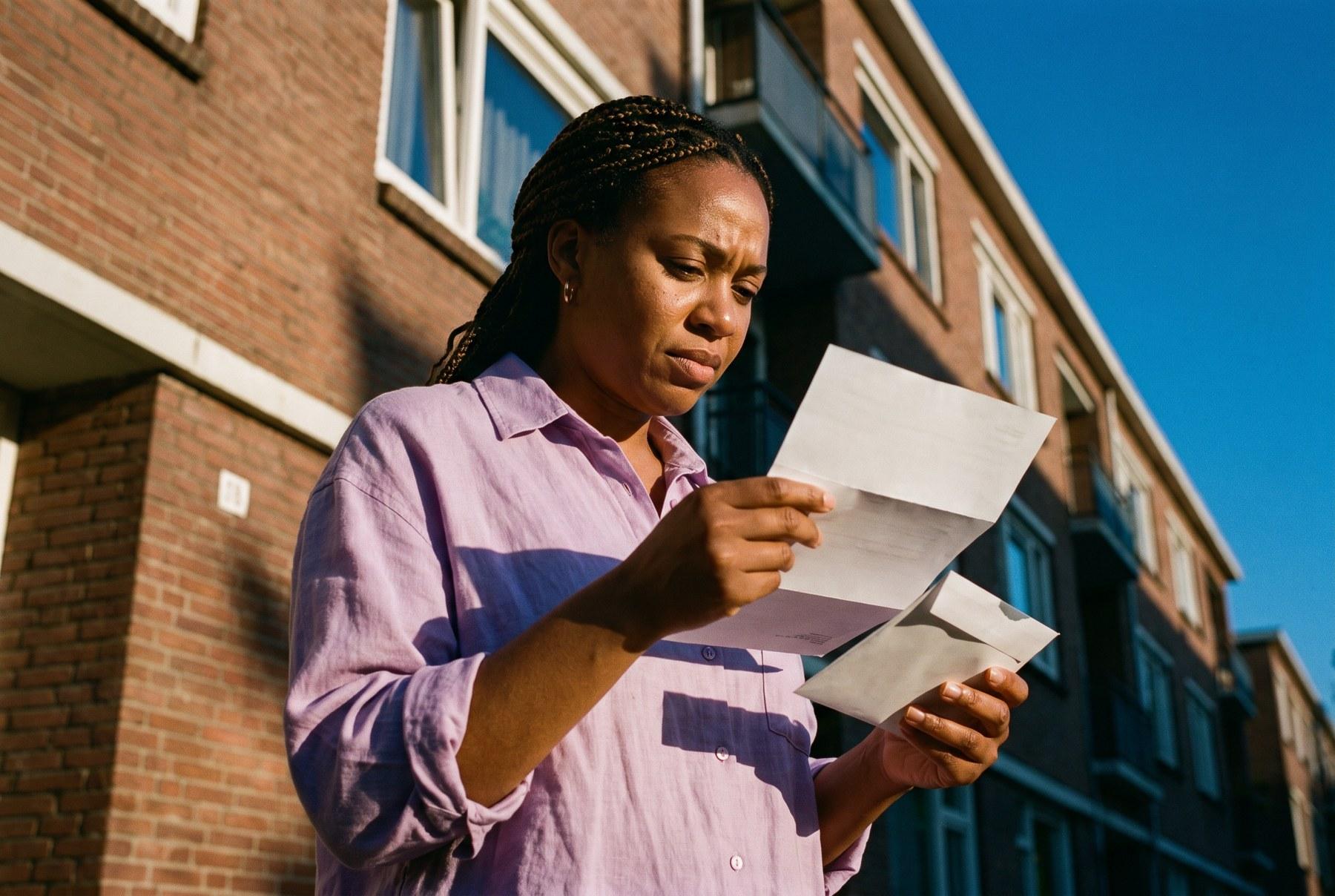
Sound familiar?
A letter you only half understand
The tax office, the police, the town hall, the immigration office. Official language, in a language that is not yours, and a date somewhere in it that matters.
The translator gives you words, not answers
You get a literal translation and still do not know whether it is serious, what to do first, or what happens if you do nothing.
AI assistants need the right prompts
ChatGPT, Claude and Gemini are great at this, but it takes a few steps: upload, explain the country, ask the follow-ups. And the letter ends up buried among all your other chats.
38%
of expats say it is easy to deal with the local bureaucracy where they live. Fewer than half find it easy to get by without the local language.
46.7 million
people living in the EU were born outside it, one in ten residents, and 1.9 million more than a year before.
304 million
people live outside the country they were born in, nearly double the number in 1990.
31%
of people feel they could easily get public benefits if they needed them. Only 28% expect the application to be simple.
One photo instead of an afternoon.
 Letter

Why not just ask ChatGPT, Claude or Gemini?
They are excellent, and you could. But each letter means a few steps and the right prompting, and the answer lives in a chat history next to everything else.
Letter runs on the same kind of AI: Anthropic’s latest Claude model. The difference is that it is set up for one job. The prompting, the rules of each country and the shape of the answer are built in, so all you do is take the photo.
It knows the rules of the country
Deadlines are counted the way each country counts them: working days, delivery dates, a last day that falls on a Sunday. A general chatbot guesses.
No prompt to write
No retyping, no explaining where you live, no follow-up questions. One photo, and the answer always has the same shape: how serious, by when, how much, what to do.
It does something about it
The deadline goes into your calendar, reminders arrive before it, and a reply is drafted in the right language if one is needed.
Your letters, kept apart
Every letter has its own place, separate from your chats: searchable, sorted by what needs you, archived when done. It stays on your phone; the photo is read once and not stored.
What you get back.
The real app, recorded with a sample fine. The reading is sped up; it usually takes about twenty seconds.
Up close.
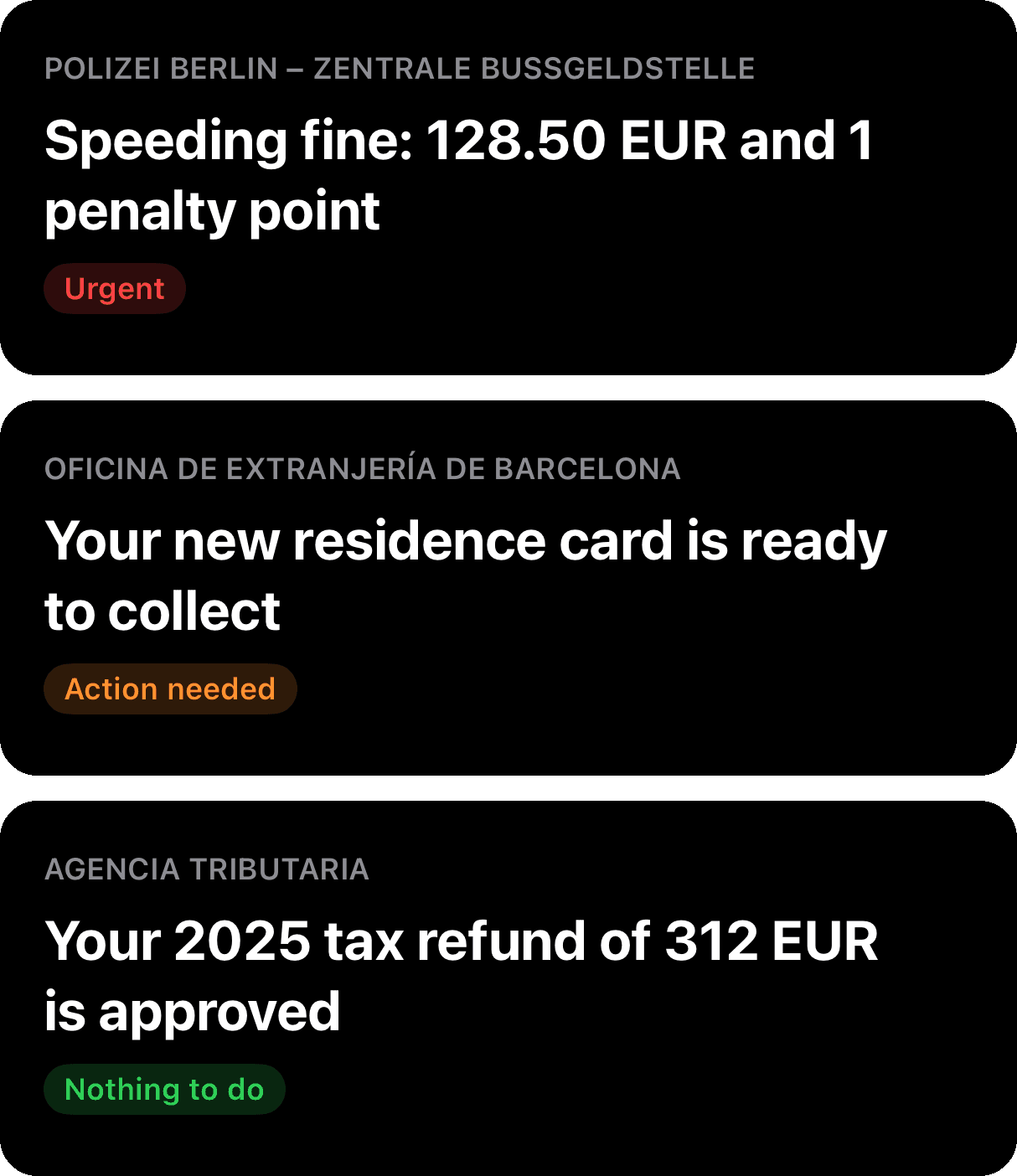
How serious is it?
Every letter gets one of four labels, so you know at a glance: urgent, action needed, nothing to do, or possible scam.
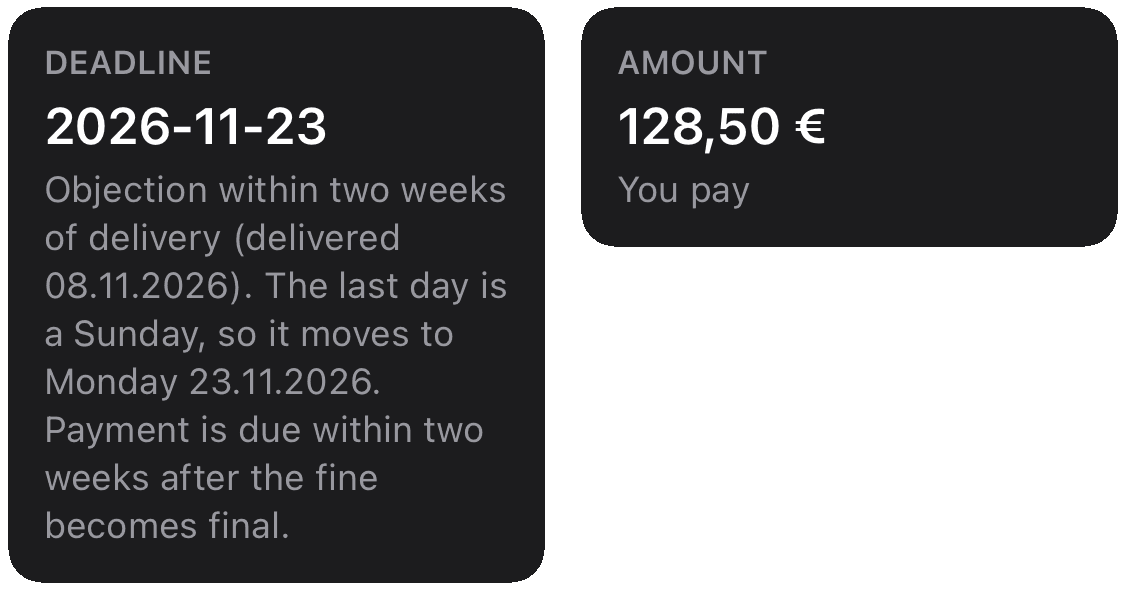
The deadline, worked out
Not just the date in the letter: the rule behind it, counted the way the country counts.
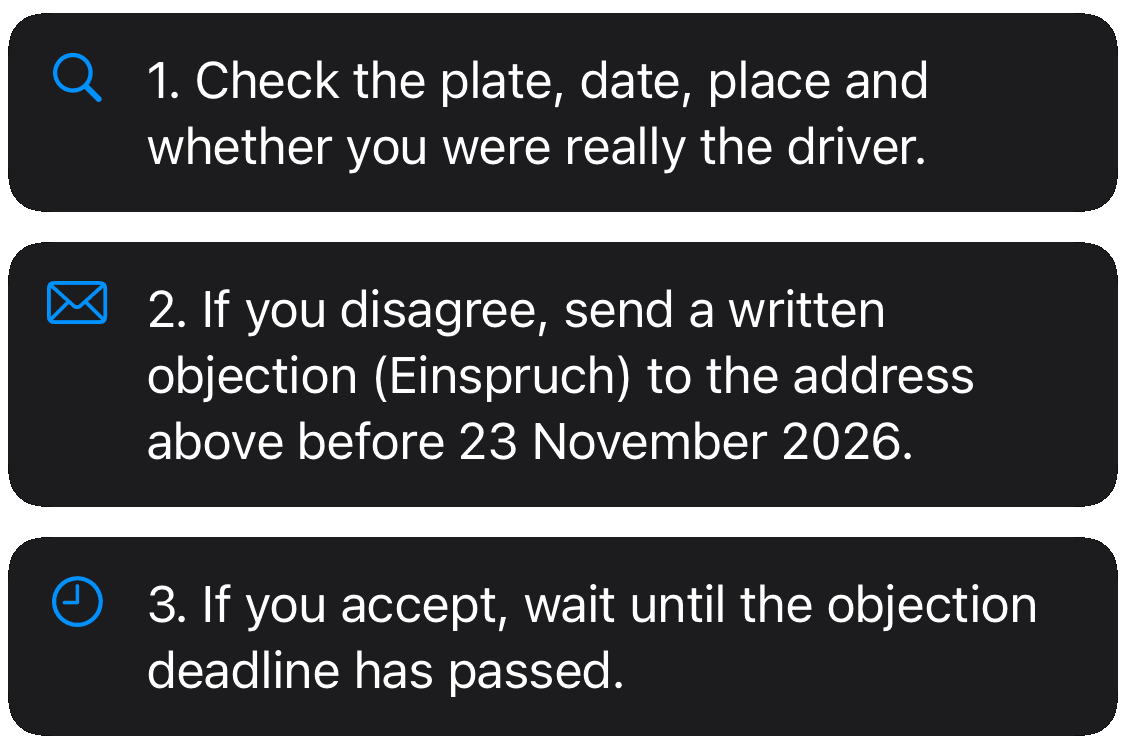
What to do, in order
Numbered steps with the reference numbers and addresses you need.
Open. Point. Know.
- 1
Photograph the letter
Add more pages if there are any. The app straightens them for you.
- 2
Wait about twenty seconds
The letter is read against the deadlines, bodies and traps of Spain, Germany, the United Kingdom, France, the Netherlands, Italy and Portugal.
- 3
Know what to do
Explained in 15 languages: English, Español, Català, Deutsch, Français, Italiano, Português, Nederlands, Polski, Română, Українська, Русский, العربية, 中文, Türkçe.


Your letters stay yours
- The photo is sent once to be read and is not kept on our server.
- The explanation is saved only on your phone. Reminders stay on your phone.
- No account, no advertising, no tracking.
Letter gives explanations, not legal advice. When a letter matters, the explanation tells you so and points you to the official body or a professional.